Fifth Sunday of Lent – Cycle C

18 March 2013

Reflecting on John 8: 1-11

No way out.  That’s what she must be thinking.  The woman standing in the middle of the Temple area must be sure that there is no way out for her.  The Pharisees have her penned in, a human sacrifice to their need to catch Jesus violating the Law.

Jesus, who knows the meaning of the words mercy, not sacrifice, is her way out.  He seems utterly uninterested in the details.  He simply issues this challenge: okay, you who have never sinned may now step up and throw the first stone. They all walk away, of course, and when he looks up he seems surprised to see her still standing there.  He couldn’t be less interested in condemning her.

His soul calls out to her soul, and the way out is clear.  Mercy.

Another  way out, of course, occurred  twelve hundred years before, when God divided the Sea and the children of Abraham marched through it dry-shod, with the water like a wall on their right and on their left.  If they stayed on land they’d be killed by Pharaoh.  If they went into the water they would drown. So God created a new way, a third way, by opening a way in the sea for them to “pass over”.

Do you think that there is no way out for you, no forgiveness, no chance to move on from your bad behaviors, bad choices, and bad priorities that now have you trapped?  Here’s God’s special love letter to you today:  Remember not the former things.  Don’t ponder the things of the past.  Behold, I’m doing something new.  Watch.

And we will all watch and pray with you.

How have you given someone a way out?

What would YOU like to say about this question, or today’s readings, or any of the columns from the past year? The sacred conversations are setting a Pentecost fire! Register here today and join the conversation.

I have come to light a fire on the earth; how I wish it were already burning (Lk.12:49).

No Comments to “Fifth Sunday of Lent – Cycle C”

Leave a Reply

You must be logged in to post a comment.

Fourth Sunday of Lent – Cycle C

11 March 2013

Reflecting on Luke 15: 1-3, 11-32

One of the things I enjoy about this forum is that I get to talk about books.  It’s also unfair, because I get to share what I’m reading while the reader doesn’t.  But this website  is open for readers from around the country to jump on and talk with each other about spiritual (or other) books they are reading.  Thanks so much for joining the online conversation!

Right now the book that captures me is Tattoos on the Heart by Gregory Boyle, S.J.  It’s his memoir of the ministry that the Jesuits set up in South Central L.A. for the ten thousand gang members within the boundaries of the parish where he serves.

At the center of each of the stories is one theme: forgiveness is the only thing that can heal us, ever.  Fr. Boyle has presided over hundreds of funerals of children he loved who were killed by children he loved.  (And then those children were killed by the “families” of the murdered, and the miserable vortex of violence just spiraled higher and wider.)

The Paschal (Easter) Mystery, which is the center of our faith, says this: Your dad beat you? You will never, never beat your own children.  Your brother was killed by a gang member?  You will not avenge his death, but will pray for his murderers.  Your son has shamed you and squandered his inheritance on dissolute living?  You will wait for him at the city gate and run to greet him when he, half-starved and humiliated, returns.

That iconic story of forgiveness is the one we all need to tattoo on our hearts.  Or maybe you have your own story, your own memory of being let off the hook that resonates even more deeply for you.  We’d love to hear it.  We’re listening.

Have you experienced a reconciliation this year?

What would YOU like to say about this question, or today’s readings, or any of the columns from the past year? The sacred conversations are setting a Pentecost fire! Register here today and join the conversation.

I have come to light a fire on the earth; how I wish it were already burning (Lk.12:49).

One Comments to “Fourth Sunday of Lent – Cycle C”

  1. Hi Kathy,
    As always, thank you for the gift of this site. I don’t comment often but I do read it every week…
    You are right my friend, forgiveness is the key to it all, isn’t it? Basking in the forgiveness of God, hopefully we understand and can imitate how we have been forgiven so lovingly. Then, maybe we can learn the lesson of forgiveness ~ by forgiving ourselves, forgiving those who’ve hurt us, and accepting the forgiveness of those whom we’ve hurt. I think it’s one of the ways we get to see God in the flesh…seeing the face of someone who has forgiven us…
    At a Lenten retreat this Sunday a lovely phrase for contemplation stuck with me: “Ponder God pondering you…smiling.” I imagine God pondering us, smiling when we get the forgiveness lesson right. 😉

Leave a Reply

You must be logged in to post a comment.

Third Sunday of Lent – Cycle C

4 March 2013

Reflecting on Luke 13: 1-9

It’s the third Sunday of Lent, and forgiveness is afoot.  The next three weeks  give us those great stories of radical love that are the hallmark of the Lenten season in Cycle C−−−the gracious second chance given  to the Barren Fig Tree, the Prodigal Son, and the Woman Caught in Adultery.  The first two stories are parables from Luke’s gospel, and the third is an event recorded in John’s gospel that scholars suspect was originally told by Luke.  Its wonderful compassion for a woman trapped in a sinful culture is so much like St. Luke that it fits perfectly in Cycle C.

I really resonate with today’s unproductive fig tree.  There are many areas of my life that continue to exhaust everyone around me, while bearing no fruit whatsoever.  (Let’s not fuss with the details, okay?)  But year after year I resolve to eat less, be less sloppy, be on time, depend on the kindness of others less and on my own discipline more.  (Okay, those are the details.)

I can hear that unfruitful fig tree crying out, in the secret language of trees, “Stop!  Please!  I’ll work harder.  I’ll take less and give more.  Please give me a second chance.  I don’t want to die.”  And we breathe a huge sigh of relief with the tree when the Gardener−−−yes, the very One who tended the original Garden−−−promises to sacrifice his own efforts in order to save the life of the tree.  A second (millionth) chance is given.

But watch! The crocus pulls up. The trumpet sounds.  It’s the third Sunday of Lent, and because forgiveness has outmatched justice, Easter is afoot.

What radical love have you experienced this Lent?

What would YOU like to say about this question, or today’s readings, or any of the columns from the past year? The sacred conversations are setting a Pentecost fire! Register here today and join the conversation.

I have come to light a fire on the earth; how I wish it were already burning (Lk.12:49).

2 Comments to “Third Sunday of Lent – Cycle C”

  1. Radical love? you just wrote it, Kathy when you noted, “A second (millionth) chance is given” – the parenthesized is truer than the statement. Then you continued, “forgiveness has outmatched justice” – – there you pointed to the essenc.e of the Gospel

  2. Every time I go to Mass I experience radical love in the Eucharist. That sacrifice is radical love.

Leave a Reply

You must be logged in to post a comment.

Second Sunday of Lent – Cycle C

25 February 2013

Reflecting on Genesis 15:5-12, 17-18

We’ve had so many beautiful, clear nights this winter that I’ve taken to stopping just before going in the door at home and looking up at the skies.  The stars hang in the sky like diamonds, and it always shocks me a bit that this immense galaxy holds such beauty just above my little house.

Of course, my friends in Africa, and Israel, and Norway tonight will look on the very stars that light the doorway of my house.  As musical composer Chris Tomlin wrote so gracefully, “God of wonder, beyond our galaxy, you are holy, holy.”

I like to imagine the stars in that desert sky when God told Abram to count them, if he could.  Now, this is even more amazing when we consider that it was daylight when God issued this challenge!  (We surmise this because later, in verse 17, it says, “When the sun had set and it was dark”.  No wonder he couldn’t count them!)

Anyway, the current estimate is that there are three thousand million billion stars in our galaxy alone. That’s how many descendants Abram was to have. Well, if you count every Jew, Christian, and Muslim who has ever lived (and apparently no one ever has counted them, but I’ll keep googling), certainly they comprise the tiniest fraction of the number of stars. So, apparently the children of Abraham still have a long time to live on the earth.  If my visits to the Muslim and Jewish quarters of the Old City of Jerusalem are any indication, Abraham’s descendants continue to multiply at a great rate.

It’s the beauty of the image of this great promise that catches my heart when I gaze upwards at night.  Count the stars?  Of course we can’t.  But God, the Intelligent Designer, used the astounding stars to capture our imagination: all creation is in an eternal covenant with the merciful and awesome God of Wonder.

Do you like to star-gaze?

What would YOU like to say about this question, or today’s readings, or any of the columns from the past year? The sacred conversations are setting a Pentecost fire! Register here today and join the conversation.

I have come to light a fire on the earth; how I wish it were already burning (Lk.12:49).

3 Comments to “Second Sunday of Lent – Cycle C”

  1. ‘am glad you mentioned all three Jews, Christians and Muslims as the inheritors of Abraham’s legacy. The religious interfighting amongst all three misses the fundamental biblical promise/covenant with our father, Abraham.

  2. As a young girl my family would go camping almost every week-end. My father and I would sleep outside next to the tent. I remember trying to count all the stars. I remember falling asleep next to my father and gazing at the stars and I know I had a smile on my face, because I felt so safe. I now love star gazing.

  3. When I star gaze, I find it very peaceful and calming after a hectic day. For me it’s God’s way of telling me “I’m here. Find rest in me.” And I always do. God is awesome!

Leave a Reply

You must be logged in to post a comment.

First Sunday of Lent – Cycle C

17 February 2013

Reflecting on Luke 4: 1-13

I always get a little chill when I think about that single instant in which Satan showed Jesus all the kingdoms of the world.  It’s fascinating to consider what the evangelist thought Jesus saw.  Luke knew about ancient Egypt and Greece, but he had no idea that there were civilizations unknown to him (but not to Satan, apparently) far to the east that had been flourishing for over two millennia.

I don’t imagine that Jesus, who was present at the creation of the world, was  surprised when Satan showed him North China, or the Indus Valley, or Africa, or even the kingdoms of the Americas, the existence of which would not even be known by people in the Middle East for another 1400 years.  Those histories, which are still unfolding through the work of archaeologists and nature’s own ingenious way of revealing the past, were certainly in the mind of God before the beginning of time.  The spooky part is that they are in Satan’s mind too.

And what did Jesus see, in that instant, of the kingdoms to come?  The fall of the Roman Empire, the vast reach of Islam, the “New World” and its diverse indigenous peoples, the bloody revolutions, the abundant harvests, the great cities and the thousands of agrarian communities were revealed in an instant.  He saw the “little man” of Assisi.  He also saw Auschwitz.

Three years later, after Satan had returned to enter Judas and to sift Peter like wheat (Luke 22), Jesus saw it all again, this time from the hill of Calvary.  And all creation, from the beginning until the end, whispered with the Good Thief, “Jesus, remember me when you come into your kingdom.”

How do you feel when you think about Jesus seeing you from the cross?

What would YOU like to say about this question, or today’s readings, or any of the columns from the past year? The sacred conversations are setting a Pentecost fire! Register here today and join the conversation.

I have come to light a fire on the earth; how I wish it were already burning (Lk.12:49).

2 Comments to “First Sunday of Lent – Cycle C”

  1. Thanks, Kathy, for asking that question…as many Lents and Good Fridays as I have seen come and go, I have never put myself in Jesus’ heart AT THAT TIME, or realized that he may have suffered for me or because of me, personally…it does stir my heart and certainly gives me a bigger sense of responsibility for my life. One of the mysteries of your question is that would would happen if we change now; can we change what might have been? That is, if we do now what would have brought more suffering for Jesus, versus bring about what would would have brought comfort and healing to his wounds, does it mean that we could change how much He would have suffered? All I can think of as an answer is that Jesus is still the suffering Jesus for our sakes, and does know joy and comfort when we soothe and comfort the wounds of others around us. A suffering, wounded person (Jesus) is so sensitive, as are all of us as his people. We must take care of each other tenderly.

  2. I don’t know. This is a heavy question. A tough question.
    My instinct says do not think about it much because it’s too much.
    Having said that, I believe I need to re-visit this question over and over again until I come even to the beginning of a resolution.
    Kathy, you are indeed a spiritual provocateur extraordinaire.

Leave a Reply

You must be logged in to post a comment.

Fifth Sunday in Ordinary Time – Cycle C

11 February 2013

When was the last time you read Charles Dickens?  My brother begged me to get reacquainted with him, and I’ve spent the last several months in reverent silence, listening to his stunning and shattering stories on audio tapes.

Hard Times is my latest find.  It was published in 1854, and reflects the soulless existence of the factory workers outside of London as the Industrial Revolution steals the health of the adults and the lives of the children.  Still in the throes of the 17th century Enlightenment, the owners of the factories and the intellectual elite of the town preach a strict adherence to FACT and REASON.  “The Good
Samaritan was a poor economist,” they say.  “Jesus should have calculated the mathematical probability of being crucified,” they nod wryly.

In other words, there is no mystery in life, nothing sacred to our existence, no ocean teeming with fish waiting for us to lower our nets on the other side.  Jesus would have flunked The Enlightenment.

Isaiah, writing 700 years before Christ, tells of entering the Temple and seeing the Lord on a throne, and angels placing hot coals on Isaiah’s lips that he may be worthy to speak of such things.  He would have flunked The Enlightenment too.

As Paul relates in today’s second reading from I Corinthians 15, (the earliest account ever written on the resurrection, preceding even Mark’s gospel), Jesus appeared to many hundreds of people after the resurrection.  Those eyewitnesses went out to the ends of the earth, filled with the Holy Spirit, preaching the Risen Lord.  They would all have flunked The Enlightenment.

Oh Lord, I want to be in that number.

In what ways do you see mystery at work in the world?

What would YOU like to say about this question, or today’s readings, or any of the columns from the past year? The sacred conversations are setting a Pentecost fire! Register here today and join the conversation.

I have come to light a fire on the earth; how I wish it were already burning (Lk.12:49).

3 Comments to “Fifth Sunday in Ordinary Time – Cycle C”

  1. Thanks for this great reminder that sometimes a group of flunkies could be the shapers of culture and civilization.

  2. It never fails to surprise me when I find out you and I are traveling on parallel paths, Kathy! That in itself is a clear expression of mystery at work, as far as I’m concerned. 🙂 I just re-read Hard Times, which is one of my all-time favorite Dickens novels, and perhaps among my top ten of ANY genre. The counterpoint to that unswerving adherence to FACT and REASON comes when the former champion of Reason says, “I have a misgiving that some change may have been slowly working about me in this house, by mere love and gratitude; that what the Head had left undone and could not do, the Heart may have been doing silently. Can it be so?”
    We have to look carefully to see where the Spirit is at work, hopefully in our own actions that make tiny but real differences to those we encounter in this rapidly changing world. That is where I find the mystery at work.

  3. Being a parent presents to me the great mystery of life. I have two children, they are as opposite as opposite can be. In spite of my perception that I raised them “just the same”, they turned out completely different. They are young adults, and they journey to their adulthood has been both a trial and pleasure for me. The mystery is that in spite of all that variation in each path they chose, they have striking similarities. I am grateful I was given the gift of faith, so the Holy Spirit can help me on my own path, and accept the mystery that we travel with every day of our lives!

Leave a Reply

You must be logged in to post a comment.

Fourth Sunday in Ordinary Time – Cycle C

4 February 2013

Reflecting on I Corinthians 12:31-13:13

When I drift off to sleep at night I try to recall all the radical love that came in my direction that day.  It washes over me like a delicious warm ocean wave, and like the ocean it rocks me gently to sleep.

There’s something about love.  We might not be able to define it, but we sure know it when we get it.  And bringing it to mind makes it “really present” all over again.

And then this thought occurs to me:  Since God is love, might it be that the only thing God CANNOT do is withhold love?  Maybe God is restricted in only one thing: God can’t stop loving us, madly, unconditionally, eternally.

At a rosary for a friend’s dad the other night the deacon read from the Rites, “God takes all of our good works with us to heaven.”  Those tiny good works that we’ve forgotten minutes after we offered them?  It turns out God has remembered every single one of them and has them stored up for us to take into eternity.

That image brings to mind the proud parent who has kept all our pictures, and trophies, and—yikes!—even our report cards, and somehow sees a beautiful, brilliant athlete/scholar there, despite all evidence to the contrary.

It’s a delicious circle.  God is LOVE, and because love never fails, God’s love keeps circling around us in an eternal loop of patience and kindness, never brooding over our sins or rejoicing over our wrongdoing.

Huh.  So THAT’S why God takes our good works to heaven with us.  Loving others creates the perfect joy that is the DNA of eternity.  Or, as Victor Hugo wrote so beautifully in Les Miserables, “To love another person is the see the face of God.”

In what ways have you experienced, by giving or receiving, the kind of love in I Corinthians 12:31-13:13?

This column was inspired by the recent deaths of four beloved Christians, each of whom loved so magnificently that it’s wonderful to imagine heaven bursting at the seams as they entered it, so much love did they bring with them.  Wayne Hendrix, Angela DiMartini, Jimmy McNamee, and Wayne Easley have each gone home to God in the past two weeks.  Watch for miracles.

What would YOU like to say about this question, or today’s readings, or any of the columns from the past year? The sacred conversations are setting a Pentecost fire! Register here today and join the conversation.

I have come to light a fire on the earth; how I wish it were already burning (Lk.12:49).

One Comments to “Fourth Sunday in Ordinary Time – Cycle C”

  1. LIKE: The only thing that God cannot do is to unlove us. (Beautiful and profound)

    NOT LIKE:”God has our good works stored for us in eternity.”
    (Some of us, like me, will end up with a small wheelbarrow of goodies whereas Fred Eyerman will have locomotives of overflowing delectables)…I know…I know…it’s just a metaphor with specific meaning….

Leave a Reply

You must be logged in to post a comment.

Third Sunday in Ordinary Time – Cycle C

28 January 2013

Reflecting on Luke 1:1-4; 4: 14-21

Of all the fascinating subjects—the saints,  scripture, social justice— that are part of the lives of the 1 billion Catholics on the globe, the one I find the most compelling is the brilliant 1969 lectionary.

If you haven’t sat with some kind of publication that has the Sunday scriptures—week after week for a year or two at least– you are missing the best-kept secret of all the reforms since the Council.

There’s a method to why we read what we read when we read it, and it’s breathtaking.  The first reading is chosen, out of all the scriptures in the entire Old Testament, to match the Gospel reading.  And the Responsorial Psalm is chosen, out of all 150 psalms, to be the soft light that illumines the connection between those two.

They rhyme, kind of.  They harmonize.  Today’s section from Luke describes the process perfectly.   Jesus takes his turn as lector in the synagogue in Nazareth.  Isaiah 61 is the Torah portion (actually the “Half Torah”, since it’s from a prophet and not from the first five books) this particular day, describing the Spirit’s anointing on the one who does justice.  Jesus closes the scroll and says, “That’s me.  Isaiah is talking about me.”

That’s how the lectionary is shaped.  The first reading is the overture, the gospel the opera.

It all started on that ancient day when Ezra the scribe, circa 450BC, read the earliest written version of The Books of Moses.  Thousands of people stood, silently aware that the Divine Presence was among them as the Word was proclaimed.

We stand still, all these years later, when the gospel is proclaimed, in communion with all the Catholic men, women and children old enough to understand.

Have you ever been fascinated with the way the readings connected on a particular Sunday?

What would YOU like to say about this question, or today’s readings, or any of the columns from the past year? The sacred conversations are setting a Pentecost fire! Register here today and join the conversation.

I have come to light a fire on the earth; how I wish it were already burning (Lk.12:49).

2 Comments to “Third Sunday in Ordinary Time – Cycle C”

  1. So insightful, Kathy in such brief narrative. Thanks for the reminder.

  2. I am fascinated every day by the way all the readings are connected to each other. Not until I read the entire bible – which took me an entire year – did I ever put all the beauty together. God is truly amazing.

Leave a Reply

You must be logged in to post a comment.

Second Sunday of Ordinary Time – Cycle C

20 January 2013

Reflecting on John 2: 1-11

African Christian Art

Right off the bat, at the very beginning of his public ministry, Jesus sets out transforming us.  The first “sign” that John’s gospel gives us is that puny, weak bit of wine that runs out so quickly at the wedding at Cana.  Watch for the transformation:

Somehow, there are SIX STONE JARS sitting outside the tiny house!  This is funny, and it’s an inside joke for the Jewish-Christian readers of the first century.  Hmm.  Where else have we seen such huge jars?  Right at the entrance to the Temple, where men did ritual washings in order to make themselves pure so they could enter. Now those huge jars have been transplanted from the Temple all the way up to the little house where the marriage party is in full swing.

A similar joke might be if someone said, “We went to some Catholic friends’ home for dinner, and the stained glass windows from the Sistine Chapel were in their living room!”  It’s John’s way of saying, “Watch for the transformation that Jesus will perform.”

His mother gives directions to the stewards, and Jesus gives directions to the created world (which he created), and the water is transformed into the best wine of the party.

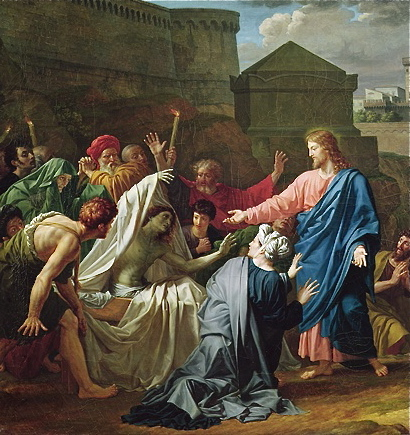
And of course there are countless transformations to come: the lonely Samaritan woman who meets Jesus at a well and becomes the premiere disciple in her village; the man born blind who is given sight so that we can see how blind we are; the dead Lazarus whose stone is rolled away.

But we don’t have to go far from the scriptures to see the best transformations, the ones that are endlessly happening in we who try and fail and try again to do whatever he tells us.

How do you try to do whatever he tells you in your life?

What would YOU like to say about this question, or today’s readings, or any of the columns from the past year? The sacred conversations are setting a Pentecost fire! Register here today and join the conversation.

I have come to light a fire on the earth; how I wish it were already burning (Lk.12:49).

No Comments to “Second Sunday of Ordinary Time – Cycle C”

Leave a Reply

You must be logged in to post a comment.

The Baptism of the Lord – Cycle C

13 January 2013

Reflecting on Luke 3: 15-16, 21-22

Happy New Year, everyone!

The other day my husband and I were walking our dog Gracie home from the park.  We passed several houses in the neighborhood, then for some reason I remembered that our friends live in the one we had just passed.  Looking back, I said to Ben, “there’s the Denny’s house”.  And there, waving frantically in the window, mouthing “Happy New Year,” were their darling grandchildren.

We waved and smiled and walked on, and wondered at the unusual coincidence that, without seeing them in the window and without hearing them calling to us, we turned in their direction in time to see their warm greeting.

At Jesus’ baptism, the heavens opened, the voice of the Father spoke, and the Holy Spirit actually appeared in bodily form as a dove.  But Luke doesn’t tell us who saw the dove, or who heard the voice. It happened, we know.  But who besides Jesus (and the evangelist, who is Spirit-inspired) had eyes to see or ears to hear?

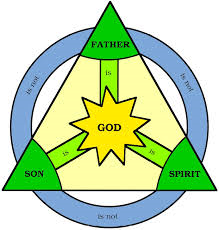
If we could train our eyes and ears, I’ll bet we too would see the heavens open, and hear the voice from heaven speak.  This appearance of the Trinity—the Son coming out of the water, the Spirit resting as a dove, the Father speaking from heaven—was not a one-time event.  Christ is always with us in our dyings and risings, the Spirit is always pointing us to the ways of peace, and the Father is always speaking to us.

Or, to put it another way, love and comfort and wisdom are constantly being waved at us through soundless windows.  Take a moment to look back and notice.

What “God moment” have you had this week?

What would YOU like to say about this question, or today’s readings, or any of the columns from the past year? The sacred conversations are setting a Pentecost fire! Register here today and join the conversation.

I have come to light a fire on the earth; how I wish it were already burning (Lk.12:49).

One Comments to “The Baptism of the Lord – Cycle C”

  1. First off, I was a little upset on how things went when I tried to log in.
    I really don’t have too much to say at this point in time, but after I have logged in and read some of your writings then I will know more. Right now what I have been able to see, it looks like it will be interesting. I am always looking for scripture readings and there meaning.

Leave a Reply

You must be logged in to post a comment.

« Previous PageNext Page »